
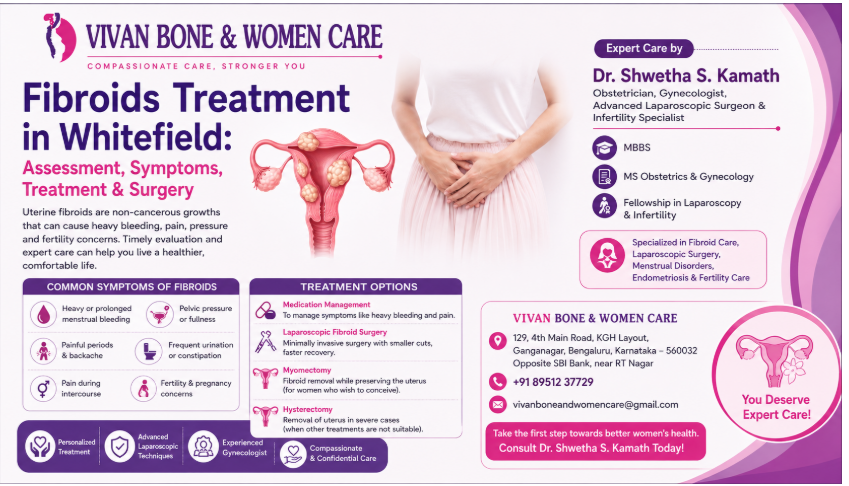
Uterine fibroids are common non-cancerous growths that develop in or around the uterus. Some women may have no symptoms, while others can experience heavy menstrual bleeding, pelvic pressure, abdominal discomfort, frequent urination, painful periods or fertility concerns.
If you are searching for Fibroids Treatment in Whitefield, a gynecological evaluation can help determine the size, number and location of fibroids and whether treatment is required. (Vivan Bone & Women Care)
SEO Keywords: Fibroids Treatment in Whitefield, Uterine Fibroids Treatment in Whitefield, Fibroid Surgery in Whitefield, Best Fibroid Specialist in Whitefield, Fibroids Treatment Near Me in Whitefield
Fibroids Treatment in Whitefield: What Are Uterine Fibroids?
Uterine fibroids are growths that develop from the muscular tissue of the uterus. They can vary in size and may occur as a single fibroid or multiple fibroids.
Fibroids are generally benign, but their symptoms can significantly affect daily life and reproductive health in some women.
Common symptoms include:
- Heavy or prolonged menstrual bleeding
- Pelvic pain or pressure
- Painful periods
- Lower abdominal fullness
- Frequent urination
- Constipation or bowel pressure
- Pain during sexual intercourse
- Backache
- Difficulty becoming pregnant in selected cases
Some women may have fibroids without experiencing any symptoms.
Uterine Fibroids Treatment in Whitefield: When Is Assessment Necessary?
A gynecological consultation is recommended when you experience persistent heavy menstrual bleeding, pelvic pressure, abnormal bleeding, pelvic pain or fertility concerns.
During an evaluation, the doctor may review your menstrual history, symptoms and reproductive history and recommend an examination or imaging such as an ultrasound when appropriate.
The clinic's diagnostic support includes USG scan facilities, which can assist with appropriate gynecological evaluation. (Vivan Bone & Women Care)
How Are Fibroids Diagnosed?
Fibroid assessment may involve:
- Medical and menstrual history
- Pelvic examination when appropriate
- Ultrasound examination
- Assessment of fibroid size and location
- Evaluation of heavy bleeding
- Fertility assessment when conception is a concern
- Additional investigations when clinically indicated
Do All Fibroids Need Treatment?
No. Treatment is not automatically necessary for every fibroid.
Small fibroids that cause no symptoms may simply be monitored. Treatment may be considered when fibroids cause significant bleeding, pain, pressure symptoms, rapid changes, or fertility-related concerns.
Fibroid Surgery in Whitefield: Understanding Treatment Options
The appropriate treatment depends on factors such as age, symptoms, fibroid size and location, number of fibroids, overall health and pregnancy plans.
Medical Management
Depending on the symptoms, a gynecologist may recommend medication to help manage heavy bleeding, menstrual symptoms or pain.
Medical treatment does not necessarily remove the fibroid itself, so ongoing evaluation may be recommended.
Laparoscopic Fibroid Surgery
Laparoscopic surgery uses small incisions and specialized instruments to treat selected gynecological conditions. It may be considered for appropriately selected fibroid cases.
VIVAN BONE & WOMEN CARE provides gynecology services including fibroid care and laparoscopic surgery. (Vivan Bone & Women Care)
Myomectomy
Myomectomy is a surgical procedure in which fibroids are removed while preserving the uterus. It may be considered for women who have symptoms or fertility-related concerns and wish to preserve their uterus.
The surgical approach depends on the number, size and location of the fibroids.
Hysterectomy
In selected situations, removal of the uterus may be recommended. This is generally considered based on factors such as symptoms, fibroid characteristics, age and reproductive plans.
Your gynecologist can explain whether conservative treatment, myomectomy or another approach is appropriate.
Best Fibroid Specialist in Whitefield: Choosing the Right Gynecologist
When searching for the Best Fibroid Specialist in Whitefield, consider a gynecologist experienced in evaluating menstrual problems, uterine conditions and minimally invasive gynecological procedures.
Dr. Shwetha S. Kamath
Designation: Obstetrician, Gynecologist, Advanced Laparoscopic Surgeon & Infertility Specialist
Qualifications: MBBS, MS Obstetrics & Gynecology, Fellowship in Laparoscopy & Infertility
Dr. Shwetha S. Kamath provides women's healthcare, gynecology, pregnancy, fertility and minimally invasive gynecological care at Vivan Bone & Women Care. The clinic specifically lists fibroids, endometriosis, menstrual disorders and laparoscopic surgery among its gynecology services. (Vivan Bone & Women Care)
Why Choose Specialist Fibroid Evaluation?
A specialist assessment can help determine:
- Whether the fibroid is causing your symptoms
- The size and location of the fibroid
- Whether monitoring is sufficient
- Whether medication may help
- Whether surgery should be considered
- How fibroids may relate to fertility concerns
Fibroids Treatment Near Me in Whitefield: When Should You Seek Help?
If you are experiencing very heavy periods, persistent pelvic pressure, recurrent pelvic pain or difficulty conceiving, consider consulting a gynecologist rather than self-managing the symptoms.
Early evaluation can help identify the cause of abnormal bleeding or pelvic symptoms and provide an appropriate treatment plan.
Fibroids and Fertility
Not every fibroid affects fertility. However, certain fibroids depending on their location and size may interfere with implantation or the uterine cavity.
Women experiencing difficulty conceiving may benefit from a fertility and gynecological evaluation to determine whether fibroids or another factor could be contributing.
Can Fibroids Grow?
Fibroid growth varies between individuals. Hormonal and other factors can influence their behaviour. Regular medical follow-up may be recommended when fibroids are being monitored.
Personalized Fibroid Care
There is no single treatment that is appropriate for every woman with fibroids. A gynecologist can assess your symptoms, reproductive goals and fibroid characteristics before recommending observation, medication or a surgical approach.
Frequently Asked Questions About Fibroids
1. What are uterine fibroids?
Uterine fibroids are generally benign growths that develop from the muscular tissue of the uterus. They can vary in size, number and location.
2. What are the common symptoms of fibroids?
Common symptoms include heavy menstrual bleeding, prolonged periods, pelvic pressure, pelvic pain, frequent urination, constipation and, in some cases, fertility concerns.
3. Do all fibroids require surgery?
No. Fibroids that do not cause symptoms may only require monitoring. Surgery may be considered when symptoms are significant or when there are specific clinical or fertility-related concerns.
4. Can fibroids cause heavy menstrual bleeding?
Yes. Depending on their size and location, fibroids can contribute to heavy or prolonged menstrual bleeding.
5. Can fibroids affect fertility?
Some fibroids can affect fertility depending on their size and location, particularly when they affect the uterine cavity. However, many women with fibroids can become pregnant.
6. What tests are used to diagnose fibroids?
A gynecological assessment commonly includes medical history and may include pelvic examination and ultrasound. Additional investigations can be recommended based on individual circumstances.
7. What is myomectomy?
Myomectomy is a surgical procedure to remove fibroids while preserving the uterus. The surgical technique depends on the location, number and size of the fibroids.
8. Is laparoscopic surgery possible for fibroids?
Laparoscopic surgery may be an option for selected patients. Suitability depends on factors such as fibroid size, number and location and the patient's overall health.
9. Can fibroids come back after treatment?
After a fibroid is removed, new fibroids can develop because the underlying tendency to form fibroids may remain. Your doctor can discuss follow-up based on your individual situation.
10. When should I see a gynecologist for fibroids?
Consult a gynecologist if you have very heavy periods, persistent pelvic pain or pressure, abnormal bleeding, urinary or bowel pressure symptoms, or fertility concerns.
Doctor & Clinic Details
Dr. Shwetha S. Kamath
Obstetrician, Gynecologist, Advanced Laparoscopic Surgeon & Infertility Specialist
Qualifications:
MBBS, MS Obstetrics & Gynecology,
Fellowship in Laparoscopy & Infertility
Areas of Care:
Fibroids, endometriosis, menstrual
disorders, laparoscopic surgery, pregnancy care, fertility and
women's health. (Vivan Bone & Women Care)
Clinic Address
Vivan Bone & Women Care
129, 4th Main Road, KGH
Layout, Ganganagar, Bengaluru, Karnataka – 560032
Opposite
SBI Bank, near RT Nagar
Phone: +91 89512 37729
Email:
vivanboneandwomencare@gmail.com
The clinic's published information identifies Ganganagar, Bengaluru, near RT Nagar, as its location. Because the clinic is actually in Ganganagar rather than Whitefield, the Whitefield terms above should be treated as target/service-area SEO keywords rather than stating that the clinic is physically located in Whitefield. (Vivan Bone & Women Care)